
Eduardo Bentivoglio
- The event, hosted by Apex Brasil, brought together leading national and international players, underscoring the collaborative capacity of diverse public and private stakeholders.
- Participants highlighted that CVCs’ patient capital has become a competitive advantage, directed toward fostering synergies between corporations and startups and laying the groundwork for the next technological revolution, in which AI will play a far more prominent role.
- As an institutional supporter of the event, EloGroup presented original research consolidating investment data from the past year, reinforcing CVCs’ greater financial discipline in this cycle — fewer investments, but with a sharper strategic focus.
The Corporate Venture in Brazil event, a landmark on the Latin American innovation and investment calendar, closed its 2025 edition by reinforcing the view that Corporate Venture Capital (CVC) is no longer a strategy-adjacent initiative, but an indispensable engine for learning, transformation, and growth within large corporations.
Over two days — October 21 and 22 — a wide range of speakers gathered at Hotel Unique in São Paulo to share their perspectives and experience in the Brazilian and international CVC market. A common thread emerged: while the domestic market is still maturing, patient capital from CVCs has been effectively deployed in recent years to drive and participate in more significant technological disruptions aimed at tackling both regional and global challenges.
EloGroup, the event’s institutional supporter, actively contributed to the discussions and to the research underpinning the event’s traditional awards, which recognize the corporations shaping this market. We now present a comprehensive overview of the conversations that dominated the 2025 stage — which, compared to prior editions, demonstrated a clear leap in maturity, with discussions shifting away from the technology hype around energy transition and AI toward how these technologies can be harnessed to generate tangible value.
CVC in a transforming market: resilience and longevity
The panel “International Corporate Venture Capital Insights — Cases & Trends“ signaled a promising momentum on the global stage, particularly in the United States, alongside a resurgence in hard tech and deep tech investments. Panelists — Nichola Bates, CEO and Founder of XelaratedFifty (Boeing Global); Tamara Steffens, Managing Director of Thomson Reuters Ventures; Xinjie Wang, Executive Director of Mercer Legacy; and Amanda Coutinho, Investment Director of ISA Capital — agreed that Corporate Venture Capital has gained an edge in recent years. Unlike traditional funds, CVCs do not depend on limited partners (LPs), which has facilitated continued dealmaking during a challenging fundraising environment. Having a corporation as a strategic partner on the cap table is widely regarded as a high-value asset by startups.
On the Brazilian front, the highlights from the CVC in Brasil 2025 Survey, presented by Jaime Frenkel, Partner at EloGroup, revealed that while the number of CVC rounds declined significantly — 66 rounds mapped between July 2024 and June 2025, less than half the prior twelve-month period — total invested capital remained substantial. This resilience in deployed capital, despite reduced deal activity, suggests that CVCs are opting for fewer investments but at larger ticket sizes.
The Longevity Formula: the Qualcomm Ventures case
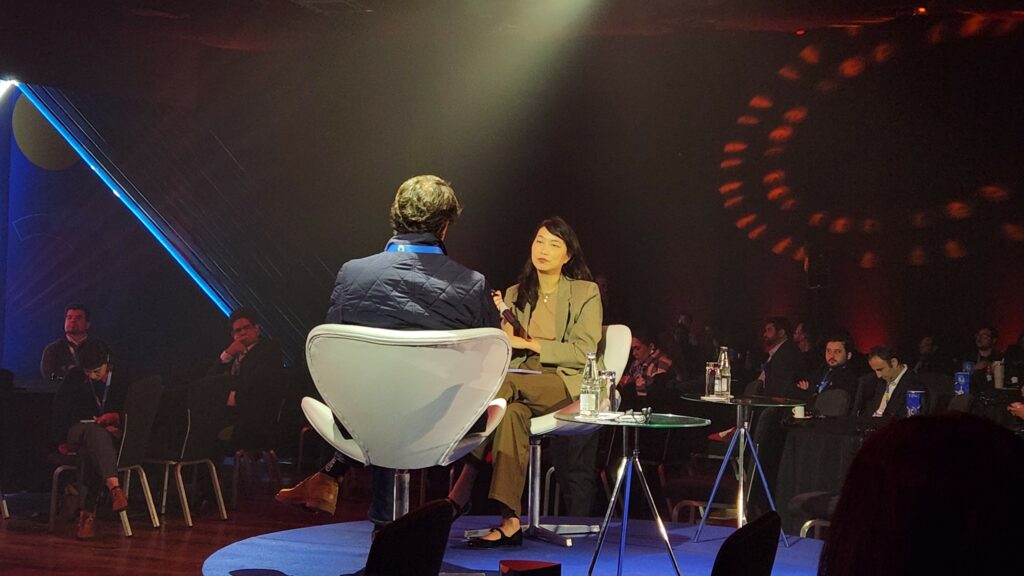
One of the event’s most impactful fireside chats — “Surviving for Two Decades — The Qualcomm Case“ — featured Stephanie Ng, Director at Qualcomm Ventures (QV), who shared the fund’s secret to endurance and resilience. Founded in 2000, QV’s approach centers not on paper returns, but on “real, cash-in-hand returns.” Liquidity has enabled the fund to weather market cycles and maintain well-timed investments, continuing to deploy capital during downturns such as the 2008 financial crisis.
With a stage-agnostic approach, QV has completed over 20 investments in Latin America across Series A, B, and C rounds, helping to build five unicorns (including Zoom, Waze, and Xiaomi). According to Ng, seed investments — while capable of generating strong multiples — do not justify the managerial focus required: “A five-million-dollar return on a small ticket doesn’t really move the needle for a corporation,” she noted.
The AI Revolution: from hype to pragmatism
Artificial Intelligence has shifted from speculation to become the driving force behind the new wave of corporate investment. In 2025, more than half of global CVC investments were directed at AI startups — a significant leap from 2024, when the sector accounted for roughly US$108 billion, or 40% of global deals. At the event, the AI discussion showed clear maturity, moving beyond technology hype toward practical application.
Among the examples presented in the panel “Beyond AI Investment: CVCs Powering Strategic AI Transformation“, ArcelorMittal showcased how it is transforming industrial operations with AI. According to Rodrigo Carazolli, the company’s Director of Business Transformation, the R-Predicta tool now autonomously predicts critical failures in steelmaking equipment, generating millions in savings. Today, 20% of the company’s internal innovation projects in Brazil are built on AI as their core technology. Vibra Energia, represented by Renato Vieira, Director of Innovation and Artificial Intelligence, highlighted vertical use cases with direct financial returns — such as improved precision in fuel pricing — and emphasized the importance of investing in internal capabilities.
Beyond funding startups, CVCs help corporations decide when to build solutions internally, acquire companies, or establish partnerships. As Maurício Escobar, Co-Founder and Board Member of Ânima Educação, noted, a due diligence process conducted by the fund on a predictive analytics startup ultimately accelerated the adoption of new methodologies by the company’s own internal team — even though the investment itself did not materialize. A clear example of how CVCs can generate value through the insights gained during screening and selection.
Protecting the core business while creating new horizons
In the panel “Keep on Moving — Reinventing Corporate’s Core Business Through CVC,” moderated by Richard Zeiger of MSW Capital, BB Seguros exemplified how open innovation has become part of its organizational DNA. According to Bruno Alves, Director of Technology and Digital Solutions, the combination of technology, data, and CVC enabled the company to double its results in three years, with 40% of 2024 revenues coming from recently created products.
Caio Moriani, Head of Open Innovation and CVC at Embraer, explained how high-risk ventures — such as Eve’s eVTOL (an electric aircraft designed for urban air mobility) — are developed outside core business units, preserving the performance of established commercial and executive aviation divisions.
The panel also highlighted the power of cross-corporate synergies. The startup Next Atlas, initially an Embraer partner, was subsequently leveraged by BB Seguros to develop products targeting pilots. Cases like these illustrate how co-investment and solution-sharing among large companies amplify outcomes and solidify CVC as an engine of cultural and strategic transformation.
International validation and startup independence
In the “Fund Manager Showcase Session“, Piero Minardi of ABVCAP spotlighted two standout cases: Azos and Tractian. Azos, an insurtech seeking to democratize life insurance, received investment from Munich Re — the global giant’s first in Latin America — under a CVC model that granted full autonomy to the founders. According to Rafael Cló, Co-Founder and CEO, the partnership delivered not only capital and credibility, but also technical access and international validation, accelerating growth and inspiring new product formats already attracting attention in the U.S. market.
Leonardo Scopel, Director of Sales at deep tech firm Tractian, described how backing from CVCs such as Siemens (Next47) and SAP (Sapphire) validated the technical superiority of their solution, which combines proprietary hardware with cutting-edge software. The investment model — featuring independent governance and a focus on strategic collaboration — ensured the startup’s freedom while opening doors for international expansion. Tractian, alongside Azos, represents a new generation of Brazilian startups that not only attract the attention of global investors but export technology and challenge sector boundaries.
Brazil in the spotlight
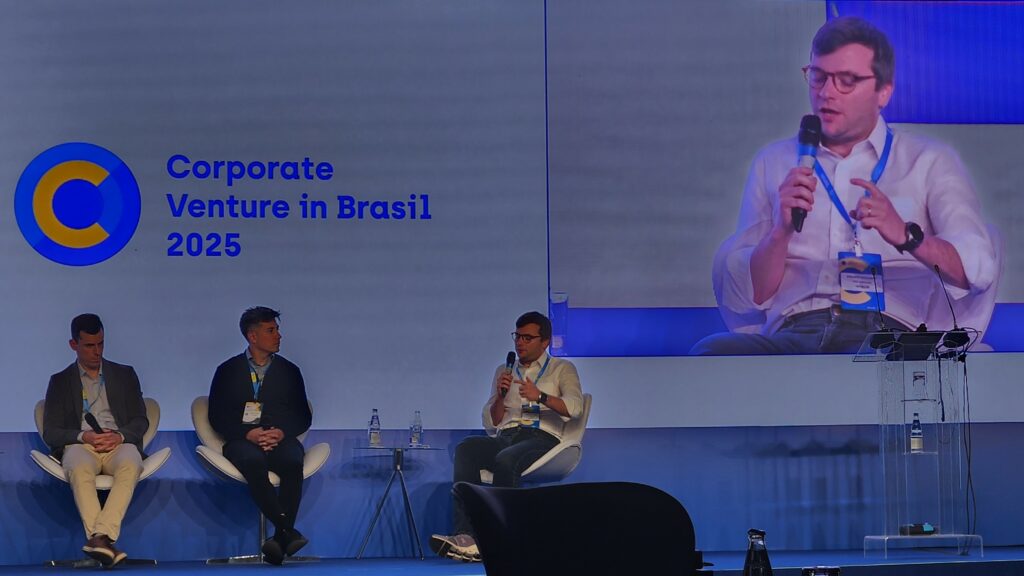
CVCs are gaining prominence in the country, participating in 25% of all investments in 2024. The panel “Brazil on the Spot — Financial CVCs Dealing with Brazilian Solutions”, moderated by Rafael Moreira, CEO and Founder of Bertha Capital, highlighted how Itaú and Citi have adopted complementary approaches to drive financial sector innovation. According to Philippe Schlumpf, Head of Itaú Ventures, the bank structures its strategy around three lenses — Core Banking, Beyond Banking, and Efficiency — and seeks meaningful governance positions, investing alongside leading venture capital funds. Seven of eight investments have already evolved into commercial partnerships with the bank. The institution also emphasized the role of structured data as the essential foundation for effective AI deployment, which already permeates roughly 150 of Itaú’s products, supported by a team of 500 specialized professionals.
Citi Strategic Investments, as described by investor Aldo Alvarez, operates with a more flexible approach, prioritizing minority stakes between 1% and 25% with a clear focus on commercial and technological synergies rather than acquisitions. The fund maintains a hands-off posture, even when collaborating with the bank’s direct competitors. This decentralized model allows Citi to broaden its access to technology solutions and emerging business models across the Latin American fintech ecosystem.
The panel “The Future of Tech Trends is Now! International CVCs Share Perspectives on Brazil“ , moderated by Laura Chicurel (Innova360/Bluebox) and featuring Maria Tereza (SoftBank), Sebastian Gonzalez (Wayra), Ziheng Li (Saison Capital), and Humberto Matsuda (Kamay Ventures), presented complementary views on how CVC is strengthening the regional technology ecosystem. The consensus was unanimous: Artificial Intelligence is the defining transformation driver of the decade, and Brazil stands out as fertile ground for solutions that combine technology and impact — in areas such as financial inclusion, productivity, and sustainability.
Executives highlighted that Latin America offers a rare combination of factors: population scale, talent diversity, and structural challenges that stimulate purpose-driven innovation. For funds like Kamay Ventures and SoftBank, the most promising opportunities lie precisely at the intersection of AI and social impact. Ziheng Li of Saison Capital identified Brazil as one of the world’s most attractive markets for credit and fintech investments, given its regulatory maturity and market size. For the panelists, the country has already established itself as the region’s innovation epicenter.
Among emerging CVC trends, Sebastian Gonzalez of Wayra highlighted a qualitative shift in investment profiles: “Fewer bets, at larger values, focused on lasting impact.” The new approach seeks to address complex challenges — such as the climate crisis, healthcare, and access to basic services — with a long-term perspective. While liquidity remains a challenge, corporate funds benefit from patient capital, enabling alternative return mechanisms such as secondaries and tender offers.
Looking ahead, Maria Tereza of SoftBank emphasized that AI’s competitive edge in the region will come from the intelligent exploitation of proprietary data, and that companies must make strategic decisions about whether to “build, buy, or partner” with those who master the technology. With a modern regulatory framework and global ambition, the panelists agreed that Latin America has the potential to become the world’s next major innovation hub.
Bridging CVC and R&D
The fireside chat “Bringing My Corporate to the Table — Connecting the Deal with the R&D Department“, featuring Bruno Arcadier, Head of Vale Ventures, and Pedro Porto, Head of R&D at Vale, underscored the importance of integration. Initially, the CVC fund (US$100 million) was met with skepticism by R&D (which invests US$170 million annually and focuses on incremental innovation). Over time, however, the complementarity proved critical.
While the relationship demands significant time and constant alignment, the CVC serves as a deal screener and collaborates on technical due diligence. Vale’s leaders noted that strategic return metrics are harder to define than financial ones. A key performance indicator: hearing from R&D how the CVC is helping shift mindsets and deliver new insights that inform their projects.
The panel “High-Level Decision Makers Joining the Stage“, moderated by Fabiana Fagundes (FM/Derraik), featured Gustavo Yuasa (Lojas Renner), Juan Merlini (Vale), and Luiza Contursi (Petrobras), who reinforced that CVC is now an essential tool for accelerating, protecting, or reinventing the core business. The executives emphasized that investment strategy must be fully integrated with corporate strategy, as innovation also means preparing the business for future cycles of disruption. Beyond financial returns, CVC plays a critical role in building internal capabilities and strengthening dialogue with the innovation ecosystem, broadening the organization’s view of emerging trends and opportunities.
Among the examples, Luiza Contursi highlighted Petrobras‘ corporate fund, launched in 2023 with a focus on energy transition and an initial commitment of R$500 million. The initiative aims to invest in up to 15 technology-based startups in areas such as electric mobility, decarbonization, and energy storage — all strategically vital to the company’s future.
Gustavo Yuasa cited the case of Lojas Renner, whose investment in an open finance company delivered unexpected strategic gains by expanding access to market data. Juan Merlini, in turn, underscored how Vale’s CVC operates as a bridge between innovation and sustainability, testing solutions capable of transforming the entire mining value chain.
New players among mid-market CVCs
CVC at mid-market companies — such as Montreal Ventures and Rosey Ventures (Grupo Marista) — also faces the challenge of persuading the corporation to embrace a culture that invests in innovation without requiring control. The fireside chat “Newcomers from the Middle Market“, moderated by Bruno Rondani (100 Open Startups), focused on this still-underexplored segment of the innovation ecosystem.
Represented by Vinicius Marcílio, Head of CVC at Montreal Ventures, and Guilherme Amorim, Director of CVC at Rosey Ventures (Grupo Marista), these corporations demonstrated that the logic of startup investment can and should be adapted to businesses with leaner structures and more centralized decision-making cultures.
At Montreal, the CVC’s purpose is to reinforce the company’s long-term continuity, while Rosey Ventures focuses on expanding the innovation horizon to H2 and H3, complementing the group’s existing capabilities — particularly in education and healthcare. As the executives emphasized, the key challenge is convincing the corporation to invest without necessarily maintaining control, accepting the risk and unpredictability inherent in innovation.
Rosey Ventures highlighted that the greatest gain so far has been cultural — enabling executives from traditional areas to recognize the value of technology solutions that extend beyond the core business. Montreal Ventures, on the other hand, offered a differentiated approach through an agile decision-making process, with a lean committee comprising the CEO and partners, which accelerates the go/no-go on investments.
Lessons from the 2024 Champions
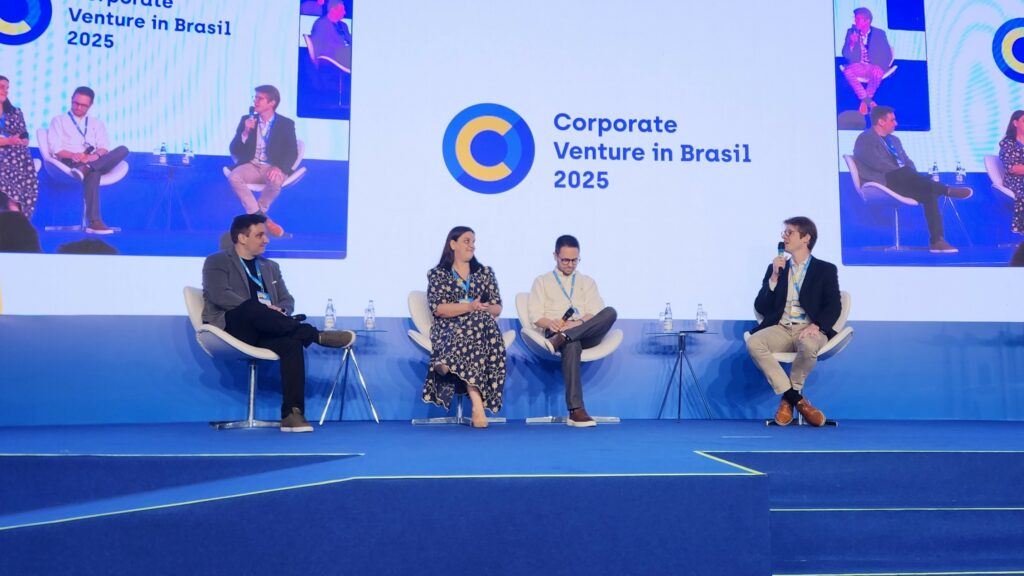
The panel “Lessons from the 2024 Champions“, moderated by Jaime Frenkel of EloGroup, brought together leading names in Brazilian CVC behind cases that defined the previous year. Thiago Iglesias (Torq/Evertec), Juliana Sarilio (BB Ventures), and Leonardo Peters (Unifique Tech Ventures) shared their views on how corporate startup investment is evolving in Brazil — and, more importantly, what distinguishes initiatives that generate real value and consistent results. The common thread: the importance of a more strategic CVC, fully integrated with the core business, capable of looking beyond short-term horizons and immediate profitability.
The Torq/Evertec case, awarded in the Largest Exit category in 2024, demonstrated how the right investment at the right time can maximize returns and accelerate transformation. The sale of Celcoin, a Torq portfolio company, embodied the value of CVC under Evertec’s new leadership. According to Iglesias, investing at more advanced stages — such as Series B — increased the likelihood of capturing financial value, but the most significant gain came from CVC’s ability to open pathways to innovations that would have been difficult to achieve through M&A or traditional R&D alone.
BB Ventures, winner in the Largest Investment category, saw Juliana Sarilio highlight the combination of financial and strategic levers as a success factor. The year’s largest investment, in startup Triving, originated from a proof of concept (PoC) and resulted in tangible synergies — including the launch of BB Expenses, a product that connects the bank, the corporate client, and the startup in a virtuous cycle of innovation and efficiency.
Unifique Tech Ventures, named Most Active CVC of 2024, brought a distinct yet equally powerful perspective: capital is only part of the value delivered to a startup. For Leonardo Peters, the true differentiator lies in the synergy created between the corporate investor and the ecosystem — something Unifique has leveraged through a diversification strategy spanning healthcare, finance, and even the pet market, backed by a base of over 1.3 million customers.
Looking ahead, last year’s winners signaled ambitious moves. Torq is preparing its international expansion via ZFlow, while Unifique is pursuing theses in smart cities and Industry 4.0, projecting 2026 as the year to harvest the fruits of its efforts.
Keynotes: iFood's purely strategic CVC and the next frontier with IBM's Quantum Leap
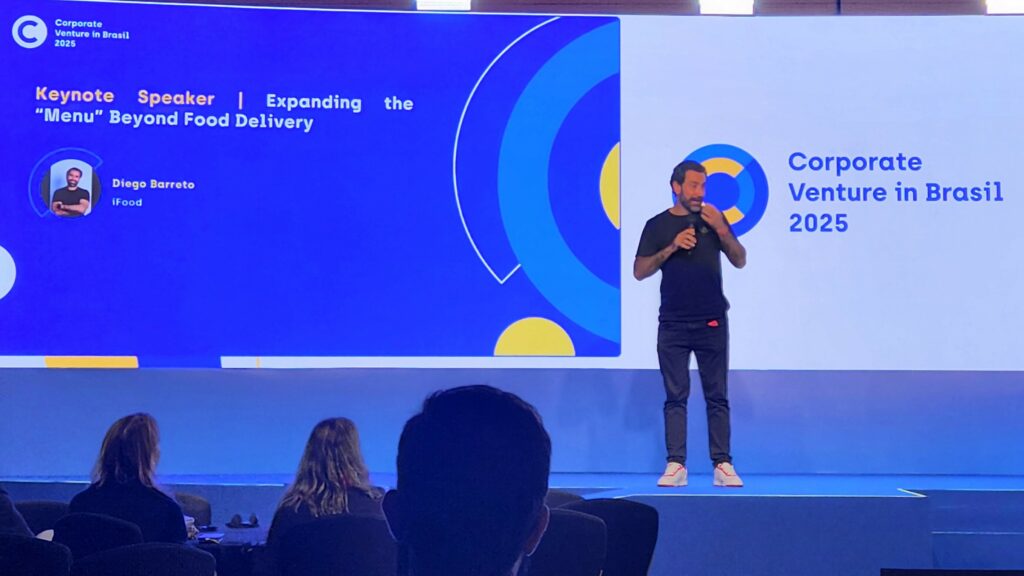
Diego Barreto, CEO of iFood, delivered the event’s first keynote, detailing the company’s evolution from food delivery into a logistics and cross-vertical commerce ecosystem. According to the executive, the strategy centers on leveraging the high frequency of food orders — an opportunity of 90 touchpoints per month, considering three meals a day — to build logistic density that enables expansion into new verticals (grocery, pharmacy).
iFood’s CVC is a clear example of a purely strategic model, where the rationale is not the individual financial return on the asset, but rather ensuring ecosystem integration and fostering strong relationships with all stakeholders. The primary value for the invested startup is the opportunity to benefit from this ecosystem. The company emphasizes that innovation “is not about structure — it’s about culture,” prioritizing clear communication of strategic priorities.
On the second day, the keynote from a tech giant sounded the alarm for the next technological revolution: quantum computing. Alexandre Pfeifer, Quantum Sales Leader at IBM, explained that while Artificial Intelligence dominates the present, quantum computing will solve “hard” problems that are intractable for digital and classical computing — such as breaking cryptographic protocols or optimizing fluid dynamics.
According to IBM’s quantum roadmap, the technology’s evolution is divided into eras: quantum utility (since 2023), where running quantum algorithms on quantum hardware already outperforms classical simulations; quantum advantage (from 2026), which will mark the ability to achieve tasks better, faster, or more cheaply on a quantum computer; and fault-tolerant systems (from 2029), where the delivery of large-scale quantum computers will enable a 1,000x leap in operational capacity.
Pfeifer noted that the potential value of quantum computing is estimated at US$500 billion. The critical message: 90% of that value will be captured by those who prepare now, given the steep learning curve. HSBC has already achieved a 34% increase in the accuracy of trade-closing predictions in the European fixed-income market using quantum computing. The inclusion of quantum computing in the discussions reinforced that CVCs are not merely reacting to current trends, but positioning themselves to capture H3 disruptions.
Recognizing excellence: the CV in Brasil Awards 2025 Champions
The CV in Brasil 2025 event closed with the traditional Corporate Venture in Brasil Awards ceremony, whose research is conducted by EloGroup. Jaime Frenkel, Partner at EloGroup, took the stage to reinforce the essential role of initiatives like this in promoting the growth, maturation, and expansion of the Corporate Venture Capital market in Brazil. The awards recognized the funds that most distinguished themselves in activity and capitalization within the Brazilian landscape.
The 2025 Corporate Venture in Brasil Awards winners were:
- SRM Ventures — Most Active CVC
- iFood (in Shopper) and Vale Ventures (in Mantel) — Largest Investment
- Petrobras and Itaú Ventures — Largest Capital Raise
Conclusion: CVC on a path toward integral transformation
The CV in Brasil 2025 event delivered, beyond networking, an in-depth assessment of CVC maturity in Brazil. The market demonstrated ongoing maturation, deploying patient capital to mitigate the region’s primary challenge — a lack of liquidity (exits) — while concentrating on cutting-edge technologies and high-impact sectors. CVCs are integrating into corporate growth strategies and positioning aggressively to capture AI-driven disruptions — transforming data into revenue, for instance.
The success of innovation, however, increasingly depends on cultural factors: alignment of expectations, organizational literacy in emerging technologies, and the courage to embed a “test, fail, and pivot fast” culture within large corporations. CVC thus becomes a catalyst that transforms risk capital into an engine of cultural and operational transformation for the future of the corporation.
EloGroup reaffirms its commitment to tracking and fostering the maturation of this ecosystem, delivering strategic insights so that corporations and startups can navigate together toward the next era of innovation and value creation. To deepen your understanding of market trends and the practical application of CVC, explore EloGroup’s related insights.
EDUARDO BENTIVOGLIO is Senior Writer and Editor of EloInsights